Insider Guide · Rome
How Many Nights in Rome Before Your Cruise?
By Karyn, Floreo Travel·Published ·Prices verified
Three, and never fewer than two. That's our answer, and unlike most of the pages that come up when you search this, we'll show you the arithmetic behind it: what each night costs, what risk it removes, and what your cruise line will and won't do if the flight goes wrong.
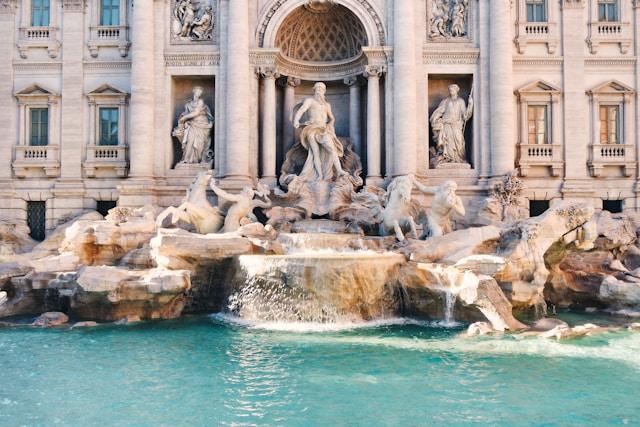
The short answer
Three nights. An extra night in Rome costs about $200 for two. Missing the ship costs you the cruise.
Two nights is the fewest we'd let a client fly on. One night survives a delayed flight but not a cancelled one, and there is typically only one flight a day from the US to Rome. Flying in on embarkation day works until it doesn't, and when it doesn't, most cruise lines' published policy is not what people assume it is.
Stay in Rome, not in Civitavecchia. The port town is 85 km from the city and there is very little there but the port.
Why anyone flies in on the day
Because on paper it works, and it's cheaper. Here is the actual timeline for a typical Rome-departure sailing leaving at 6pm.
| Time | What's happening |
|---|---|
| ~08:30 | Overnight flight from the US lands at Fiumicino |
| ~09:45 | Through immigration, bags collected |
| ~10:45 | Arrive Civitavecchia — FCO to the port is 62 km, 45–60 minutes |
| 14:00 | Princess's stated latest arrival for a Civitavecchia embarkation: four hours before departure |
| 18:00 | Ship sails |
That's more than three hours of slack against the line's own deadline. Which is why people do it, and why it usually works.
The problem is what the slack is made of. Three hours absorbs a late departure, a slow immigration hall, and traffic on the A12. It does not absorb a cancellation, a missed connection in the US, or a mechanical that pushes your one transatlantic flight of the day to tomorrow. There is generally one flight a day on any given US to Rome route, so a cancellation isn't a delay of hours, it's a delay of a day, and the ship will have left.
The question isn't whether same-day arrival usually works. It's what happens on the day it doesn't.
What each extra night costs, and what it buys
A well-located, well-reviewed hotel in central Rome runs roughly $200 a night for two in shoulder season, breakfast included. That's the price of the insurance. Here's the policy it buys.
| Nights before the cruise | Added hotel cost, two | Survives a delay? | Survives a cancellation? | Jet lag on embarkation day | Rome you actually see |
|---|---|---|---|---|---|
| 0 — fly in and board | $0 | Only a short one | No | Severe | None. You see the A12. |
| 1 | ~$200 | Yes | No — a cancelled flight puts you in Rome the day the ship sails | Significant | One evening |
| 2 | ~$400 | Yes | Yes, with a day to spare | Mild | One full day |
| 3 — our default | ~$600 | Yes | Yes, comfortably | Gone | The city, properly |
The row that matters is the cancellation column. One night is the option most people choose and it is the one that looks safe without being safe. It protects you against the thing that's annoying and not against the thing that's expensive.
The second and third nights do different jobs. The second night is insurance. The third night isn't insurance at all. It's the difference between having been to Rome and having seen Rome, and it costs $200.
Our verdict: three nights. Two if the trip is tight. If someone tells us one night, we say yes, and then we tell them to buy the cruise line's air or comprehensive travel insurance, because they've chosen to carry the risk and they should at least know they're carrying it.
What actually happens if you miss the ship
Nothing dramatic, and no one helps you very much.
If you don't board by the deadline, the ship sails. Your booking isn't automatically cancelled but you are not on the vessel, and catching up is your problem and your expense. On a Rome-to-Athens itinerary the next port is usually reachable, since Naples is about 70 minutes from Rome by fast train, but you'll be buying a train ticket, a hotel night, a transfer, and eating the excursion you'd prepaid, and you'll need to clear rejoining with the line and with port immigration in advance rather than simply turning up at the gangway.
The important part is the principle. A cruise line's obligation to you if you miss embarkation on travel you arranged yourself is essentially nil. Where it does take on responsibility is when you booked the flights through them, and that's worth understanding before you decide how many nights to stay.
Does the cruise line's flight protect you?
Every major line sells flights. All four market them as protected. Only one publishes an actual commitment to get you to the next port, and one publishes a fallback that amounts to losing the trip. Here is what each says on its own site.
| Line | Program | What it publishes | What that means for you |
|---|---|---|---|
| Princess | EZair — “Next Port Protection” | A 24/7 En Route Desk that will rearrange you onto “the next available flight or the next available port of call” if the airline delays or cancels on your travel day | The strongest of the four, and the only explicit next-port commitment. Flights are also free to change or cancel until final payment. |
| Azamara | Azamara Air | “Day-of-travel support, flight monitoring, 24/7 on-call assistance, and hotel and transportation costs if flights are delayed or cancelled” | Real help, but no published promise to get you to the next port. Azamara's next-port language belongs to its Voyager travel insurance, not to the air program. |
| Royal Caribbean | Flights by Royal (Air2Sea) | A 24/7 team that will “make every effort to help you get onboard your cruise” | Effort-based. No published commitment, and whose expense is not stated. |
| Celebrity | Flights by Celebrity | “If the flight gets cancelled or delayed and Celebrity Cruises is unable to get the guest to the ship, we will offer a Future Cruise Credit and refund the cost of the flight” | The published fallback is that you don't take this trip. You get a credit toward another one. |
Quoted from each line's own site, 26 August 2026. Programs change, so check before you rely on any of it.
Two things to take from that table.
Booking air through the line is worth more than most people think, but the value varies enormously between lines, and it is not interchangeable. Princess EZair and Flights by Celebrity are marketed almost identically and their published failure modes are not remotely the same.
Even the best of them is opt-in. Princess's protection is delivered by a phone desk. There is a documented case of passengers who held EZair tickets, were delayed five hours, never called the En Route number, and went home. The protection existed, would have put them on the ship at the first port, and did nothing because nobody dialled it. If you book air through a line, put the emergency number in your phone before you leave.
And none of it is a substitute for arriving early. All four programs are about recovering from a failure. Three nights in Rome means there's no failure to recover from.
Rome or Civitavecchia?
Rome, in almost every case.
Civitavecchia is a working port town of about 50,000 people, 85 km up the coast from Rome. It has a pleasant seafront, a Michelangelo-designed fort, and some genuinely good fish restaurants. It also has, for a visitor, roughly half a day of interest, and you are not flying to Italy for half a day.
The case people make for staying there is that it removes the transfer on embarkation morning. That's true, and it's worth less than it sounds. The transfer is 75 to 90 minutes on a motorway and it is the least stressful part of the day. What you give up in exchange is every evening you could have spent in Rome.
There is one exception. If your flight lands late in the evening the day before you sail, a night in Civitavecchia is a sensible way to be certain of the morning. Otherwise, stay in Rome and transfer.
Getting from Rome to the ship
Three ways, and the right one depends almost entirely on how many of you there are and how much luggage you have.
| Option | Cost | Time | Best for |
|---|---|---|---|
| Regional train (FL5) | €4.60–€5.00 pp one way, or €12 for a BIRG day ticket covering Rome transit too | 30–60 min from the right station, plus a 10–20 min walk or a €6 shuttle at the Civitavecchia end | A port-day round trip with a daypack. Not embarkation day with suitcases. |
| Shared shuttle | ~€45–€60 pp | 50–75 min from FCO, ~1.5 hrs from central Rome | Two people who want door-to-door without a private-car price |
| Private car | A typical published tariff is €220 for one to two people, €250 for three or four, €270 for five or six | 75–90 min from central Rome, 45–60 min from FCO | Embarkation day, any party with real luggage, and from three passengers up, better value than a shared shuttle |
The crossover is at three people. A private car for four at €250 works out at €62.50 each, against €50 each for a shared shuttle with a minimum-passenger risk and other people's pickups built into your morning. For two, the shared shuttle genuinely is cheaper. For anyone else, take the car.
Note the night surcharge, typically about €30 between 7pm and 7am, and that Ciampino costs a little more than Fiumicino.
If you do take the train: use the right station
The FL5 line runs along the coast and stops at four Rome stations. Defaulting to Termini is the most common mistake and it is also the slowest option.
| Rome station | Journey time to Civitavecchia | Notes |
|---|---|---|
| Roma San Pietro | 50–60 min | The fastest, and a short downhill walk from St Peter's. The right choice for most people. |
| Roma Trastevere | ~55–65 min | Good if you're staying in Trastevere |
| Roma Ostiense | ~60–70 min | On Metro line B |
| Roma Termini | 75–85 min | The one everyone picks, and 25 minutes slower than San Pietro |
At the Civitavecchia end, the station is 1 to 1.5 km from the port entrance, a 10 to 20 minute walk along the seafront, pleasant with hand luggage and unpleasant with a suitcase. A shuttle runs between the station and the port on ship days for €6 per person each way, and it's optional.
Once inside the port there is a separate free shuttle connecting the cruise berths to the Largo della Pace service centre at the port exit, every 20 to 25 minutes. Don't confuse the two. The free one is the one you need to reach your ship, and the €6 one just saves you the walk from the station.
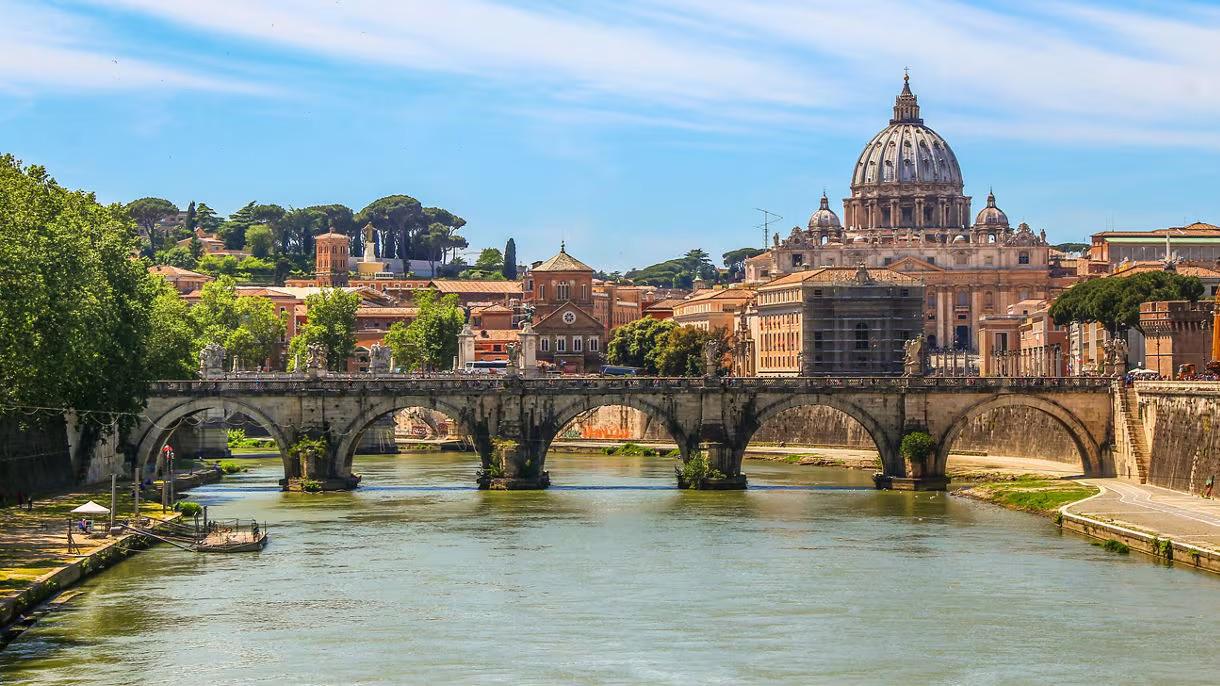
What three nights in Rome actually gets you
Not a rushed checklist. Three nights in Rome is one easy evening and two proper days, which is enough to see the two things everyone comes for and still have unstructured time.
Evening one. Land, check in, and do nothing demanding. The Spanish Steps, Trevi, the Pantheon, Piazza Navona and dinner in the historic centre are all walkable, none of it requiring a ticket or a guide. Go to bed early and let the jet lag sort itself out.
Day two, Ancient Rome. One guided morning: the Colosseum, the Roman Forum and Palatine Hill, which share a single combined ticket valid 24 hours with one entry to each. Small-group guided tours run roughly $70 to $120 per person. Then an unstructured afternoon in Monti, and dinner in Trastevere.
Day three, the Vatican. The Vatican Museums, the Sistine Chapel and St Peter's. This is the other place we'd pay for a guide rather than just an admission ticket, though timed-entry tickets on your own work perfectly well if the budget is tight. Leave the afternoon open: Castel Sant'Angelo, the river, coffee, another very good dinner.
Morning four. Transfer to Civitavecchia and board. You're over the time change, you've seen the city, and you're not counting on anything.
Budget roughly $250 to $600 for two across those two days of touring and admissions, depending on whether you take one guided tour or two.
Where to stay
Location matters more than star rating for a stay this short. What you want is somewhere you can walk out of and be somewhere, because you have three evenings and you don't want to spend them in taxis.
The historic centre, around the Pantheon, Piazza Navona and Campo de' Fiori, puts everything on foot and costs the most. Monti is quieter, has better everyday restaurants, and is a short walk from the Colosseum. Prati, near the Vatican, is calm and residential and has the practical advantage of being near Roma San Pietro station if you're taking the train to the port. Trastevere is the best evening neighbourhood and the least convenient for everything else.
At around $180 to $220 a night for two you can have a well-reviewed boutique three or four-star with breakfast in any of them. Above about $300 you're buying a better building rather than a better trip. On a three-night pre-cruise stay we'd almost always put that money into a guide instead.
We book these directly, and our rates through preferred partners often include breakfast or a room upgrade that isn't available on a booking site. If you're planning the whole trip, we've priced the same Mediterranean cruise three ways, Rome nights included, with every line item.
Common questions
How many nights should I spend in Rome before a Mediterranean cruise?
Three. Two is the practical minimum. An extra night costs about $200 for two and removes the risk that a cancelled flight ends the trip before it starts, and the third night is what turns a transfer stop into an actual visit to Rome.
Is one night in Rome before the cruise enough?
It survives a delayed flight. It does not survive a cancelled one, and on most US to Rome routes there is only one flight a day. If you're doing one night, book the flights through the cruise line or buy comprehensive travel insurance, and know that you've chosen to carry the risk.
Can I fly in on the day the ship sails?
It usually works. An overnight landing at Fiumicino around 8:30am puts you at the port by about 10:45, against a boarding deadline of 2pm on a 6pm sailing. That's three hours of slack, which is plenty for a delay and useless for a cancellation. We don't recommend it, and we'll book it if you insist.
Should I stay in Rome or Civitavecchia the night before?
Rome. Civitavecchia is a working port town 85 km from the city with about half a day of interest. The only case for it is a flight that lands late the previous evening.
How do I get from Rome to Civitavecchia cruise port?
Private car (about €220 for two, 75 to 90 minutes, door to door), shared shuttle (about €50 per person), or the FL5 regional train (€4.60 to €5.00, 50 to 85 minutes depending on which Rome station, plus a walk or a €6 shuttle at the other end). On embarkation day with suitcases, take the car.
Which Rome station for the Civitavecchia train?
Roma San Pietro, 50 to 60 minutes and a short walk from the Vatican. Termini is the one most people pick and it's 75 to 85 minutes, the slowest of the four stations on the line.
Is the port shuttle in Civitavecchia free?
There are two different shuttles. The one connecting the cruise berths to the port exit at Largo della Pace is free and runs every 20 to 25 minutes. The one between the port and the train station is €6 per person each way and is optional, since it's a 1 to 1.5 km walk.
How long does it take to get from Fiumicino airport to the cruise port?
62 km, 45 to 60 minutes by road. Fiumicino is meaningfully closer to Civitavecchia than central Rome is.
What happens if my flight is delayed and I miss the ship?
If you arranged the flights yourself, catching up is your problem and your expense: a train or flight to the next port, a hotel night, and any prepaid excursion you've lost. If you booked through the cruise line, what happens depends heavily on which line. Princess publishes an explicit commitment to get you to the next port, while Celebrity's published fallback is a future cruise credit.
Does booking flights through the cruise line protect me?
Partly, and it varies more than you'd expect. Princess EZair is the strongest, with a 24/7 desk that will route you to the next port of call. Azamara covers hotel and transport costs but publishes no next-port promise. Royal Caribbean commits to “every effort.” Celebrity's published fallback is a credit toward a future cruise. Whichever you use, save the emergency number to your phone, because the protection only works if you call it.
Do I need a guide for the Colosseum?
Not strictly. The combined Colosseum, Forum and Palatine ticket is valid 24 hours with one entry to each and you can walk it yourself. But it is a site where a good guide is the difference between rubble and a story, and small-group tours run roughly $70 to $120 per person. If you only pay for one guide in Rome, we'd make it this one or the Vatican.
Is it better to do the land stay before or after the cruise?
Rome before, Athens after. Rome is the better place to be while you're getting over the time change, and Athens is a better decompression than a warm-up. It also means the risky flight, the transatlantic one, has three days of buffer in front of it instead of none.
Keep exploring
- The Mediterranean, three ways — the same trip priced at three levels, Rome nights included
- Mediterranean shore excursions, port by port — why Rome is a land stay and not a port day
- Princess vs Azamara for the Mediterranean — which line fits the trip
Not sure which sailing is yours? Tell us what you're after and we'll watch for a match. Start a cruise match
Ready to build the trip?
Tell us your sailing and we'll build the front end of it: the flights, the Rome nights, the transfer, and the tours worth paying for.
Prices, transfer options and cruise-line air policies verified 26 August 2026. Policies change without notice, so confirm with your line before relying on any of it.
Prices and policies verified . Cruise fares and tour prices change constantly, so ask us for a live quote.